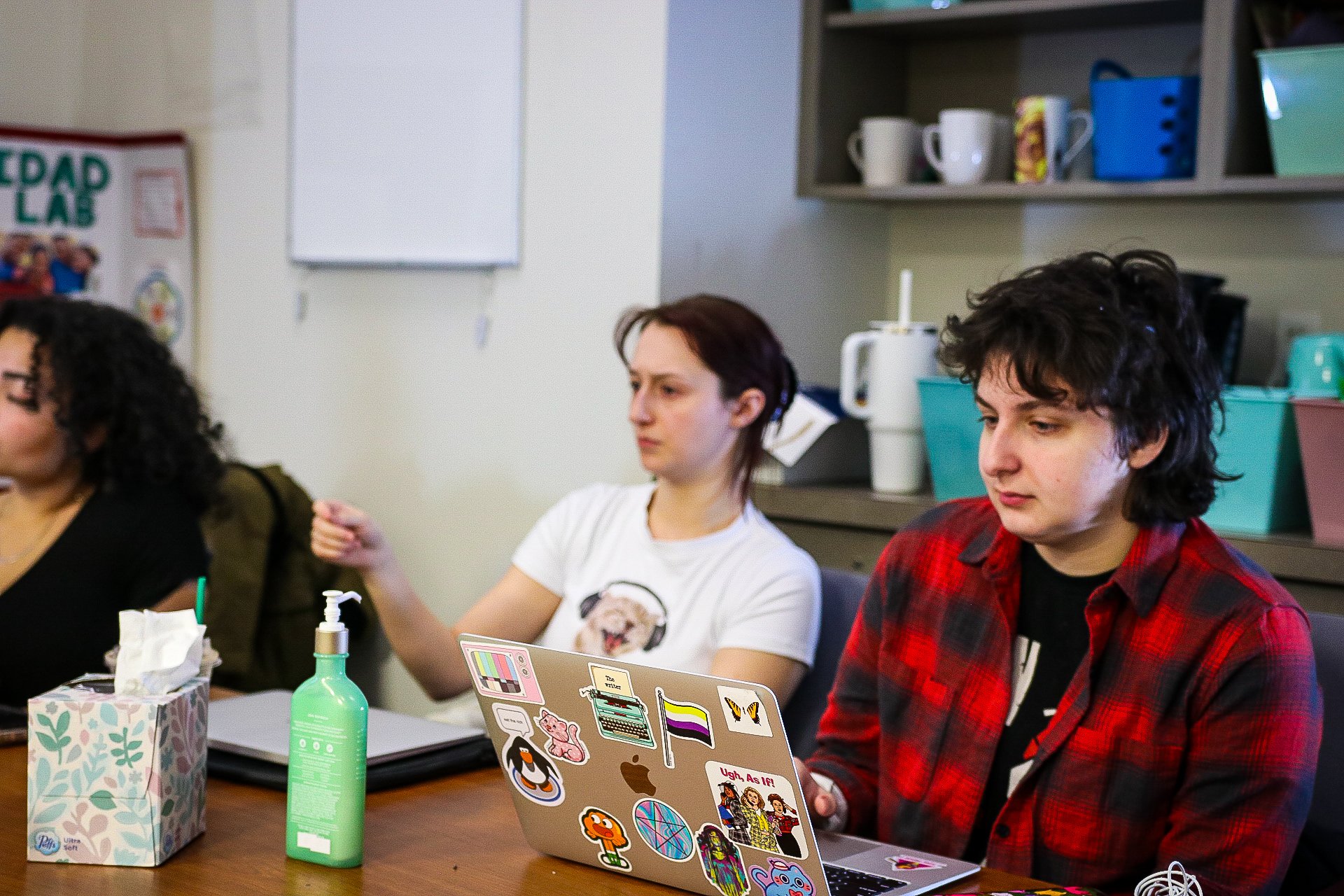
The Identity Development Across the African Diaspora (IDAD) Lab
The Identity Development Across the African Diaspora (IDAD) Lab at The College of New Jersey examines how race, ethnicity, immigration, culture, and social context shape the identities, educational experiences, and well-being of Black adolescents and emerging adults.
Directed by Dr. Adaurennaya C. Onyewuenyi, the IDAD Lab centers the diversity of experiences within Black communities. Our research considers both the shared experiences that can emerge through racialization and anti-Black racism and the distinct experiences shaped by ethnicity, immigration, nationality, culture, and other social and institutional contexts.
Through collaborative research, the lab also provides undergraduate students with opportunities to develop as researchers while contributing to scholarship on questions that matter to Black communities across the African diaspora.
What You’ll Do as a Lab Member
As a part of the IDAD Lab, you’ll actively contribute to meaningful, community-rooted research. Lab members engage in a variety of activities, including:
Collaborating with teens, young adults, and local community partners
Reading and synthesizing academic literature
Designing research protocols and recruiting participants
Assisting with data entry, coding, and analysis
Presenting findings at conferences and co-authoring publications
You’ll gain practical experience in developmental and educational psychology, all while making an impact both on campus and off.
What We Study
Our research is guided by a central question: How do Black youth and young adults develop identities, navigate institutions, and experience belonging and well-being within diverse racial, ethnic, cultural, and social contexts?
Current areas of inquiry include:
Racial and ethnic identity development among Black adolescents and emerging adults
Black immigration and racialization, including the experiences of African and Caribbean immigrant-origin populations
Intra-Black diversity and dynamics, including ethnicity, nativity, colorism, solidarity, and belonging
Racism and educational experiences, including interpersonal and institutional forms of racial discrimination
Mental health and well-being, including how young people respond to and navigate racialized stressors
Protective and cultural processes, including racial identity, racial solidarity, social relationships, community engagement, and other resources young people draw upon
Methodological approaches for studying Black experiences, including Quantitative, Qualitative, and Quantitative Ethnography
Current Research
Black Identity, Immigration & Intra-Black Experiences
This program of research examines how Black American and Black immigrant adolescents and emerging adults understand race, ethnicity, and Blackness and how these identities shape their experiences in educational and social settings. Current projects investigate racial and ethnic identity, intra-Black relationships, racial solidarity, boundary-making, and the ways immigration and ethnicity shape experiences of belonging within Black communities.
Racism, Educational Experiences & Well-Being
These projects examine how racialized experiences—including discrimination, institutional race-related stressors, and colorism—relate to academic and psychological outcomes among Black students. We are particularly interested in identifying the conditions under which individual, cultural, and social resources may protect against inequity, as well as circumstances in which strategies commonly understood as protective may also carry psychological or academic costs.
Capturing Complexity in Black Experiences
The lab also explores methodological approaches for studying heterogeneity and complexity within Black populations. We use qualitative, quantitative, mixed-methods, and computational approaches to examine not only whether experiences differ across groups, but how identities, contexts, relationships, and structural conditions work together to produce those differences. Some projects use Epistemic Network Analysis to investigate patterns while maintaining connections to participants’ experiences and the contexts in which they occur.
Research & Training in the IDAD Lab
The IDAD Lab is both a research space and a community for developing undergraduate scholars. Students participate in different stages of the research process depending on their interests, experience, and the needs of current projects.
Lab members may gain experience with:
Conducting literature reviews and developing research questions
Data collection (surveys, interviews, focus groups, etc.) and data management
Applying inductive, deductive, and abductive coding processes
Statistical, mixed-methods, and computational analyses
Interpreting findings and connecting results to theory
Preparing research posters, conference presentations, and manuscripts
Communicating research to academic and broader audiences
As students gain experience, they are encouraged to take increasing ownership of the research process, develop their own questions, and contribute intellectually to collaborative projects.
Our Approach to Mentorship
Mentorship in the IDAD Lab emphasizes curiosity, collaboration, intellectual growth, and increasing independence. Students enter the lab with different levels of research experience, and prior expertise with particular research methods is not expected.
Lab members learn research by participating in it: asking questions, working through methodological decisions, discussing interpretations, receiving feedback, and collaborating with peers. Students are encouraged to understand not only how to conduct research but also to think critically about why particular questions are asked, how methodological choices shape what researchers can know, and whose experiences and perspectives are represented in the research process.
The goal is for students to develop both practical research skills and confidence in seeing themselves as contributors to knowledge.
Lab Members
Current Research Assistants
Tessa Ackep, Kat DeVita, Katherine Fisher, Jacob Roberts, Olivia Steele
Lab Alumni
Zahidah Abdul Wadud, Julie Abaci, Gianna Barone, Jennifer Bedele, Gigi Caballero, Ashton Calo, Kari Carmody, Shreya Chinnamatur, Louis Cosentino, Sydney Defreitas, Jazzlyn Diaz, Jazlynne Fernandez, Moustapha Fofana, Erika Garcia, Claudia Goncalves, Rachel Guloy, Diamond Hackley, Cornelia Iftimoaie, Daniel Inwood, Somai Jaiyeola, Katie Kline, Stephanie Konadu, Anastasiya Kuzyk, Camille Lansang, Sharie Logan, Jabari Mangum, Joanna Martinez, Joanna Martinez, Samara Menard, Meahgan Miller, Alex Molan, Naia Moore, Naia Moore, Snehi Mukkamalla, Naomi Odusanya, Noelya Ramos, Kearlyn Reeves, Alice Restituyo, Gabriela Reyes, Elisa Rios, Sophia Santos, Bridget Smith, Selma Sose, Nathaniel Such, Kimmy Torres, Catherine VanMorter, Leanne Villareal, Chloe Yadav, Kaitlyn Yetman
Who Should Apply?
We welcome students from all grade levels and majors—especially those interested in:
Youth development and educational equity
Off-campus research and community engagement
African Diaspora studies and social justice
Weekly lab meetings take place Wednesdays from 10:00 AM – 12:00 PM. If you're passionate about working with youth, challenging inequality, and growing as a scholar, we’d love to hear from you.
Ready to Learn More or Join the IDAD Lab?
Contact Dr. Onyewuenyi to be part of transformative, justice-oriented research or learn about the IDAD Lab by checking out our Instagram!